
BigCommerce SEO in 2026: How to Rank in Google AI Overview & Get Recommended by ChatGPT
AI-Ready BigCommerce Themes
Build an AI-Optimized Store That Ranks Everywhere
44+ themes with built-in schema markup, lightning-fast performance, and semantic HTML structure
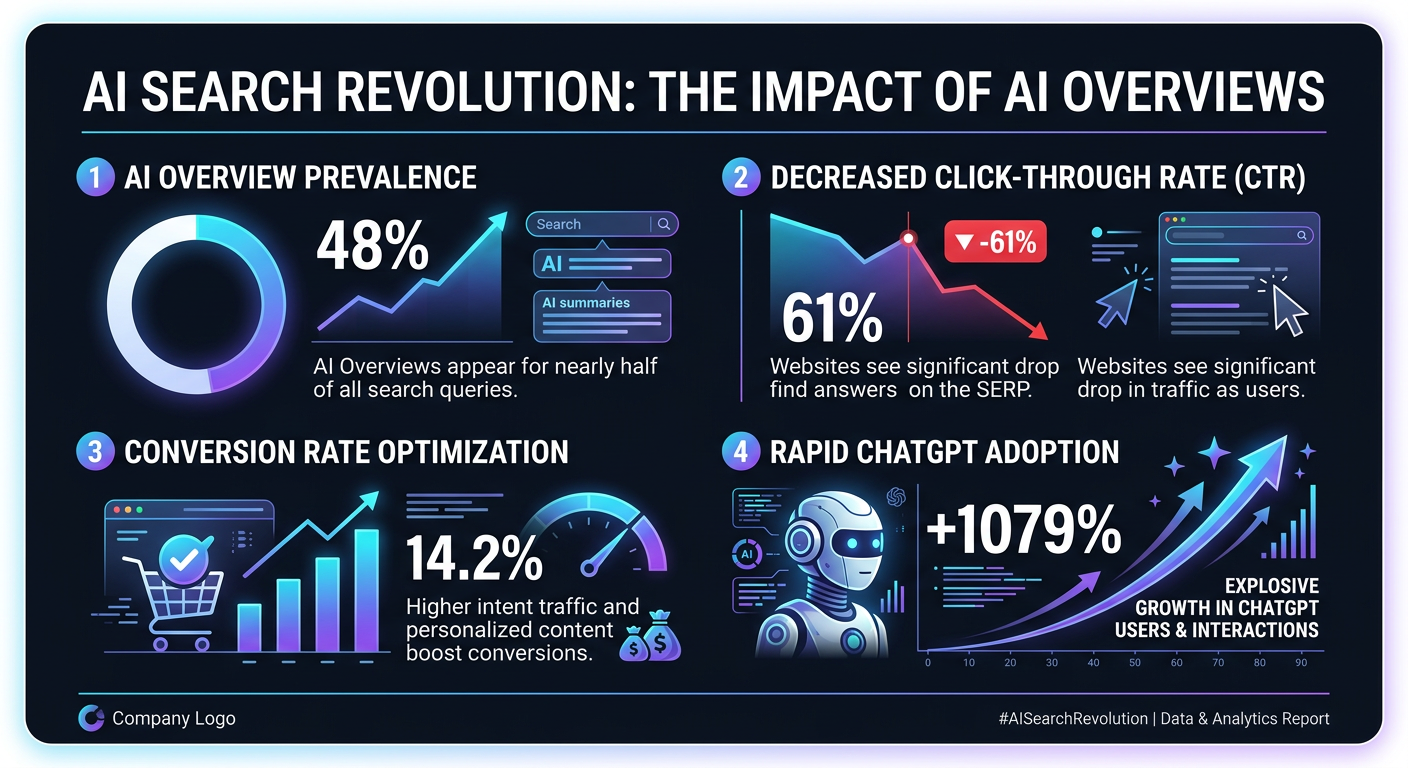
Browse AI-Ready Themes →Google AI Overviews now appear in 48% of all searches — and organic click-through rates have dropped 61% on those queries. Meanwhile, ChatGPT ecommerce referrals grew 1,079% in 2025 alone. The question is no longer if AI will reshape how customers find your store — it's whether your BigCommerce store is ready to be cited, recommended, and surfaced by these AI systems.
This guide gives you the complete playbook for Generative Engine Optimization (GEO) — the new discipline of optimizing your content so Google AI Overview, ChatGPT, Perplexity, and other AI systems cite your store. We'll cover the ranking factors that matter, the schema markup BigCommerce stores need, and practical steps you can implement today.
Why Traditional SEO Alone No Longer Works
The search landscape has fundamentally shifted. Here's what the data shows:
| Metric | Impact |
|---|---|
| AI Overview prevalence | 48% of all Google searches (Feb 2026) |
| Organic CTR drop | -61% on queries with AI Overviews |
| Paid CTR drop | -68% on AI Overview queries |
| ChatGPT referral growth | +1,079% YoY for ecommerce (2025) |
| AI-referred conversion rate | 14.2% vs. 2.8% for standard organic |
| Citation advantage | 35% more clicks for cited brands |
The old playbook of keyword stuffing and link building is dead. AI systems evaluate content differently — they look for semantic completeness, factual accuracy, structured data, and multi-modal richness. Domain authority, once the golden ticket, now correlates at just r=0.18 with AI citations (down from r=0.43 in 2024).
But here's the opportunity: 47% of AI Overview citations come from pages ranking below position five in traditional search. That means even newer stores with modest domain authority can win AI citations — if they optimize correctly.
The 7 Ranking Factors for Google AI Overview
Based on analysis of over 15,000 AI Overview results, these are the factors that determine whether your BigCommerce store gets cited:
1. Semantic Completeness (Highest Priority)
AI Overview prefers content that is self-contained and comprehensive — each section should make sense on its own without requiring context from elsewhere on the page.
What this means for your store:
- Write product descriptions as complete "information islands" of 134–167 words
- Each section should answer a question fully, not reference "as mentioned above"
- Category pages should explain what the category is, who it's for, and why it matters — not just list products
BigCommerce implementation:
- Use your theme's custom fields to add rich, standalone descriptions to every category
- Add contextual content blocks above and below product grids
- PapaThemes AI Widgets can generate complete, semantically rich content sections for any page with a single AI prompt — just describe what you need and the widget builds it
2. Multi-Modal Content (Text + Images + Video + Schema)
Pages with text, images, video, and schema markup show 317% higher citation rates in AI Overviews. AI systems favor rich, multi-format content that serves different learning styles.
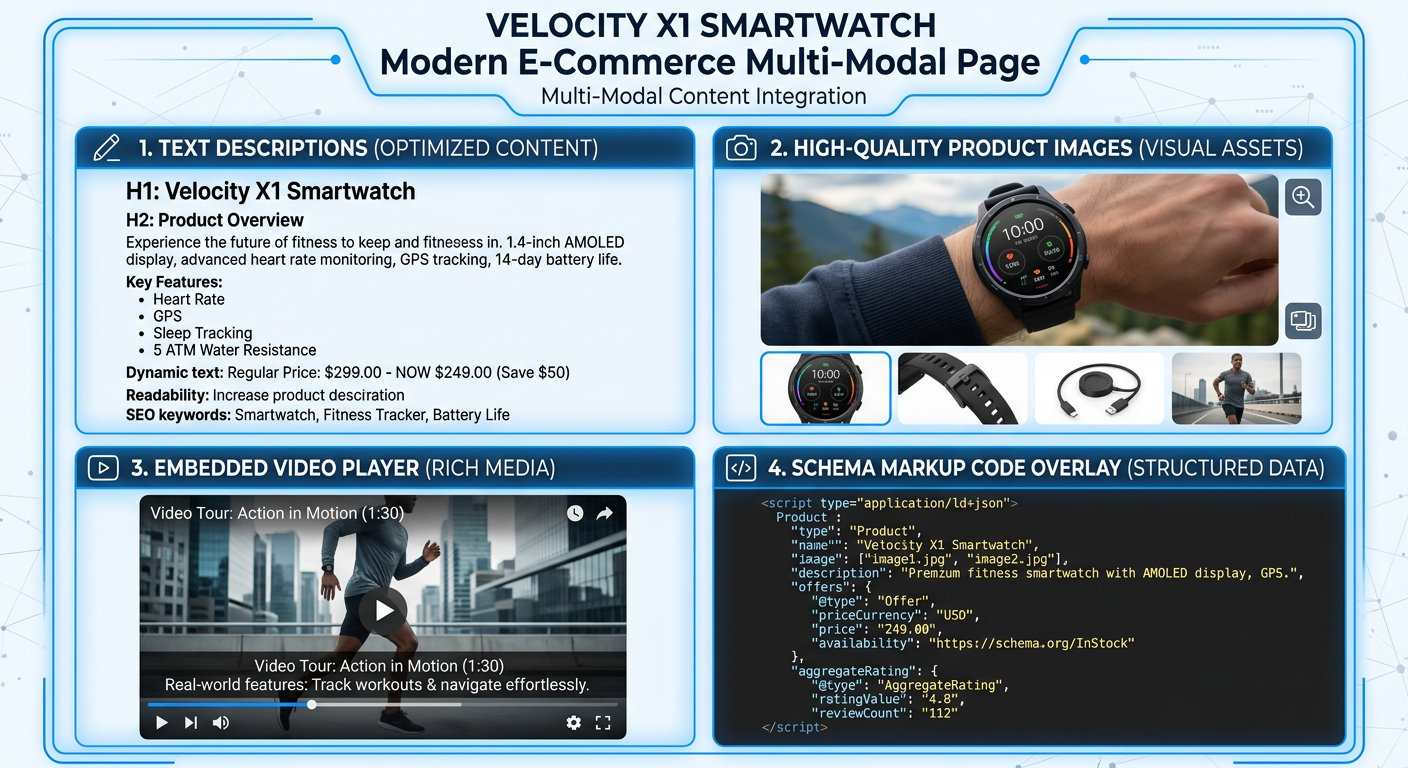
What this means for your store:
- Every product page needs high-quality images with descriptive alt text
- Embed short product videos (60–90 seconds) on key product pages
- Add FAQ sections with proper schema to category and product pages
- Blog posts should include inline images in every major section
BigCommerce implementation:
- Use PapaThemes themes — all 44+ themes include optimized image galleries, video embedding support, and clean semantic HTML structure
- Add FAQ tabs to product pages using your theme's built-in tab system
- Use PapaThemes AI Widgets to create rich content sections with images, comparison tables, and feature showcases — no coding required
3. Factual Verification & Citations
AI systems prioritize content that links to authoritative sources. Pages citing peer-reviewed or government sources get 132% higher visibility, and expert quotes boost citations by 78%.
What this means for your store:
- Link to BigCommerce official documentation when discussing platform features
- Cite industry reports (Baymard Institute, NNGroup) when making UX claims
- Include specific, verifiable statistics with dates — "conversion rates increased 23% (Baymard, 2025)" not "conversion rates go up"
- Reference real customer results with specifics
4. E-E-A-T Signals (Experience, Expertise, Authority, Trust)
96% of AI Overview citations come from verified authoritative sources. Author credibility has moved from a bonus to a requirement.
What this means for your store:
- Blog posts must have visible author bylines with real credentials
- About pages should showcase team expertise and industry experience
- Include customer testimonials with full names and business names (with permission)
- Display trust badges, certifications, and partnership logos
BigCommerce implementation:
- Create detailed author profiles on your blog
- Add Person schema markup to author pages
- Use review apps to display verified customer reviews with rich snippets
- PapaThemes themes include testimonial sections, trust badge areas, and structured review displays built into every theme
5. Entity Knowledge Graph Density
Content with 15+ connected named entities (brands, people, tools, standards) shows 4.8x higher AI citation rates. AI systems build understanding through entity relationships.
What this means for your store:
- Name specific products, brands, standards, and technologies in your content
- Don't write "our ecommerce platform" — write "BigCommerce"
- Reference specific tools: "Google PageSpeed Insights," "Schema.org Product markup," "Core Web Vitals"
- Mention industry players and how your products compare or integrate
6. Structured Data (Schema Markup)
Properly structured content shows 73% higher selection rates for AI Overview citations. This is where BigCommerce stores have a massive opportunity — and where most are falling short.
We'll cover this in depth in the schema markup section below.
7. Content Freshness
Content older than 3 months shows a sharp drop in AI citation frequency. AI systems prefer recent, up-to-date information.
What this means for your store:
- Update key blog posts quarterly with fresh statistics and examples
- Add "Last updated: [date]" to important content pages
- Publish regular content on trending topics in your niche
- Keep product descriptions current with seasonal references
How to Get Recommended by ChatGPT
ChatGPT ecommerce referrals are growing explosively — 1,079% year-over-year — but optimizing for ChatGPT requires different strategies than Google AI Overview.
How ChatGPT Decides What to Recommend
When a user asks ChatGPT "What's the best BigCommerce theme for a fashion store?", the system:
- Searches its training data for entities matching the query
- Checks live web results (via Bing integration) for current information
- Evaluates brand authority signals — mentions across multiple trusted sources
- Synthesizes an answer citing the most authoritative, frequently mentioned options
5 Strategies for ChatGPT Visibility
Strategy 1: Build Off-Site Brand Mentions
Brands in the top quartile for online mentions receive 10x more AI citations than the next quartile. ChatGPT learns about your brand from what others say about it.
- Get featured in BigCommerce partner directories and app marketplace
- Publish guest posts on ecommerce industry blogs
- Participate actively in Reddit communities (r/ecommerce, r/BigCommerce, r/webdesign)
- Contribute to BigCommerce Community Forum with helpful, expert-level answers
- Seek mentions in "best BigCommerce themes" roundup articles
Strategy 2: Create Comprehensive Comparison Content
ChatGPT breaks complex questions into sub-queries. If someone asks about BigCommerce themes, ChatGPT may separately evaluate: design quality, performance, price, support, customization options.
- Create dedicated comparison pages covering every angle
- Include pricing tables, feature matrices, and pros/cons
- Address competitor alternatives honestly — AI rewards balanced content
Strategy 3: Publish Expert-Level Educational Content
ChatGPT heavily cites educational content with clear structure and expertise signals.
- Write comprehensive tutorials with step-by-step instructions
- Include code snippets, screenshots, and video walkthroughs
- Use question-based headings that match how people ask ChatGPT
Strategy 4: Maintain Technical Accessibility
- Verify your
robots.txtdoesn't block AI crawlers (OAI-SearchBot, ChatGPT-User) - Use server-side rendering — JavaScript-dependent content may not be indexed
- Don't hide key information behind tabs, accordions, or login walls
- Ensure your CDN (Cloudflare, etc.) doesn't block AI bots
Strategy 5: Refresh Content Every Quarter
ChatGPT citation frequency drops sharply for content older than 3 months. Keep key pages updated with current dates, statistics, and examples.
Essential Schema Markup for BigCommerce Stores
Schema markup is the single most impactful technical optimization for AI search visibility. Here's exactly what your BigCommerce store needs:
Product Schema (Every Product Page)
This is the most critical schema type for ecommerce. It enables rich snippets showing price, availability, and ratings directly in search results — and signals clear product information to AI systems.
{
  "@context": "https://schema.org",
  "@type": "Product",
  "name": "Supermarket – Large Store BigCommerce Theme",
  "image": "https://papathemes.com/content/supermarket/supermarket-hero.jpg",
  "description": "A high-converting, fully responsive BigCommerce Stencil theme designed for large catalog stores, supermarkets, and multi-category retailers. Features mega menu, quick view, product comparison, and 50+ customizable sections.",
  "brand": {
    "@type": "Brand",
    "name": "PapaThemes"
  },
  "sku": "supermarket-bc-theme",
  "offers": {
    "@type": "Offer",
    "url": "https://papathemes.com/supermarket-large-store-stencil-bigcommerce-template/",
    "priceCurrency": "USD",
    "price": "299",
    "availability": "https://schema.org/InStock",
    "priceValidUntil": "2026-12-31"
  },
  "aggregateRating": {
    "@type": "AggregateRating",
    "ratingValue": "4.9",
    "reviewCount": "47"
  }
}
Critical rules for BigCommerce:
- Pull values dynamically from BigCommerce product objects — never hardcode prices or availability
- Ensure the schema price matches the visible price on the page — mismatches cause Google to lose trust
- Include
aggregateRatingonly if you have real reviews (fake ratings can trigger penalties)
FAQ Schema (Category & Product Pages)
FAQ schema is described as "a goldmine for AI Overview" — it directly maps to how AI systems extract and display answers.
{
  "@context": "https://schema.org",
  "@type": "FAQPage",
  "mainEntity": [
    {
      "@type": "Question",
      "name": "What makes PapaThemes different from other BigCommerce themes?",
      "acceptedAnswer": {
        "@type": "Answer",
        "text": "PapaThemes offers 44+ premium BigCommerce Stencil themes with lifetime licenses, free updates, and dedicated support. Each theme includes advanced features like mega menus, product comparison, and Ajax add-to-cart that competitors charge extra for."
      }
    },
    {
      "@type": "Question",
      "name": "Do PapaThemes themes support multi-currency and multi-language?",
      "acceptedAnswer": {
        "@type": "Answer",
        "text": "Yes. All PapaThemes themes fully support BigCommerce's multi-currency and multi-language features, including RTL layouts for Arabic and Hebrew markets."
      }
    }
  ]
}
HowTo Schema (Tutorial & Guide Pages)
Essential for getting cited in step-by-step AI answers:
{
  "@context": "https://schema.org",
  "@type": "HowTo",
  "name": "How to Install a PapaThemes BigCommerce Theme",
  "description": "Step-by-step guide to installing and configuring a PapaThemes theme on your BigCommerce store.",
  "step": [
    {
      "@type": "HowToStep",
      "name": "Download the theme",
      "text": "After purchase, download the .zip theme file from your PapaThemes account dashboard."
    },
    {
      "@type": "HowToStep",
      "name": "Upload to BigCommerce",
      "text": "In your BigCommerce admin, go to Storefront > Themes > Upload Theme and select the downloaded .zip file."
    }
  ]
}
Article Schema (Blog Posts)
{
  "@context": "https://schema.org",
  "@type": "Article",
  "headline": "BigCommerce SEO in 2026: How to Rank in AI Overview & ChatGPT",
  "author": {
    "@type": "Person",
    "name": "PapaThemes Team",
    "url": "https://papathemes.com"
  },
  "datePublished": "2026-03-14",
  "dateModified": "2026-03-14",
  "publisher": {
    "@type": "Organization",
    "name": "PapaThemes",
    "logo": {
      "@type": "ImageObject",
      "url": "https://papathemes.com/content/papathemes-logo.png"
    }
  }
}
How to Add Schema to BigCommerce
Method 1: Theme Template (Recommended)
If you're using a PapaThemes Stencil theme, schema markup is already partially built-in. For additional schema:
- Go to Storefront > Script Manager in your BigCommerce admin
- Create a new script with placement "Footer" and location "All Pages"
- Add your JSON-LD schema wrapped in
<script type="application/ld+json">
Method 2: PapaThemes AI Widgets
Use PapaThemes AI Widgets to add schema markup to any page without touching theme code. Simply create a widget, paste your JSON-LD, and place it on the desired page via the BigCommerce widget system.
Method 3: Dynamic Schema with Handlebars
For developers using PapaThemes Stencil themes, add dynamic Product schema directly in templates/pages/product.html:
<script type="application/ld+json">
{
  "@context": "https://schema.org",
  "@type": "Product",
  "name": "{{product.title}}",
  "image": "{{getImage product.main_image 'original'}}",
  "description": "{{stripHtml product.description}}",
  "brand": {
    "@type": "Brand",
    "name": "{{product.brand.name}}"
  },
  "offers": {
    "@type": "Offer",
    "priceCurrency": "{{currency_selector.active_currency_code}}",
    "price": "{{product.price.without_tax.value}}",
    "availability": "{{#if product.can_purchase}}https://schema.org/InStock{{else}}https://schema.org/OutOfStock{{/if}}"
  }
}
</script>
AI-Era Content Strategy for BigCommerce Stores
Beyond technical SEO, your content strategy needs to evolve. Here's how to create content that AI systems want to cite:
Write for "Information Islands"
Each content section should be a standalone answer. AI systems extract specific passages — they don't read your entire page.
Before (traditional SEO):
"As we discussed in the previous section, themes play a crucial role. Building on that foundation, let's explore..."
After (AI-optimized):
"BigCommerce themes directly impact conversion rates. Stores using professionally designed themes see 23% higher conversion rates compared to default themes (BigCommerce, 2025). Premium themes like PapaThemes' collection include conversion-optimized features such as quick view, sticky add-to-cart, and product comparison — features that reduce friction and increase average order value."
Create FAQ Content for Every Key Page
AI Overview and ChatGPT heavily favor FAQ-formatted content. Add FAQ sections to:
- Product pages: "Is this theme compatible with BigCommerce multi-currency?", "Does this theme support headless/Catalyst?"
- Category pages: "What's the best BigCommerce theme for fashion?", "How much do BigCommerce themes cost?"
- Blog posts: 3–5 questions related to the article topic
- Landing pages: Address common objections and questions
Target "People Also Ask" Queries
Google's "People Also Ask" boxes are a goldmine for AI content. These questions represent exactly what AI systems try to answer.
High-value queries for BigCommerce stores:
- "What is the best BigCommerce theme for [industry]?"
- "How to speed up a BigCommerce store"
- "BigCommerce vs Shopify themes"
- "How to add custom sections to BigCommerce"
- "Best BigCommerce apps for [use case]"
For each query, create a dedicated content piece or section with a clear, direct answer in the first paragraph, followed by detailed supporting information.
Leverage Video for Multi-Modal Signals
Video content dramatically increases your chances of AI citation. For BigCommerce stores:
- Product demo videos (60–90 seconds) on every key product page
- Tutorial videos for setup, customization, and best practices
- Comparison videos showing your products vs. alternatives
- Embed videos on the relevant page — don't just link to YouTube
Technical SEO Checklist for AI Readiness
Use this checklist to ensure your BigCommerce store is fully optimized for AI search:
Crawlability & Access
-
robots.txtallows AI crawlers (OAI-SearchBot, ChatGPT-User, Google-Extended, Anthropic-ai) - CDN/WAF doesn't block AI bot user agents
- Key content renders server-side (not JavaScript-dependent)
- No critical content hidden behind login walls, tabs, or accordions
- XML sitemap is current and submitted to Google Search Console
Schema Markup
- Product schema on all product pages (dynamic values)
- FAQ schema on category pages and key landing pages
- Article schema on all blog posts
- BreadcrumbList schema on all pages
- Organization schema on homepage
- AggregateRating schema where reviews exist
- Test all schema with Google Rich Results Test
Content Structure
- H1 contains primary keyword on every page
- Each H2 section is a self-contained "information island" (134–167 words)
- FAQ sections on all key pages
- Images with descriptive alt text in every content section
- Internal links to related pages (3–5 per page)
- External links to authoritative sources (2–3 per page)
Performance & Experience
- Core Web Vitals passing (LCP < 2.5s, FID < 100ms, CLS < 0.1)
- Mobile responsive design
- Image optimization (WebP format, lazy loading)
- Page load under 3 seconds
Content Freshness
- Key pages updated within last 3 months
- "Last updated" dates visible on content pages
- Statistics and examples are current (no outdated data)
- Regular publishing schedule (minimum weekly blog posts)
How PapaThemes Helps You Win in AI Search
Every product in the PapaThemes ecosystem is built with AI-era SEO in mind:
PapaThemes BigCommerce Themes (44+ Themes, $119–$395)
All PapaThemes themes include:
- Clean semantic HTML that AI systems can easily parse
- Built-in schema support for products, breadcrumbs, and organization
- Lightning-fast performance (sub-2-second load times) improving Core Web Vitals
- Mobile-first responsive design with AMP-ready pages
- Multi-currency and multi-language support including RTL layouts
- GDPR-compliant cookie consent and privacy features
Browse the full collection: papathemes.com/bigcommerce-themes/
PapaSearch — AI Semantic Search ($29/month)
PapaSearch replaces BigCommerce's basic search with AI-powered semantic search:
- Understands natural language queries ("red dress under $50 for summer wedding")
- Improves on-site search conversion rates
- Generates structured search data that feeds into your store's SEO signals
- Reduces bounce rate from search — a key quality signal for AI systems
PapaThemes AI Widgets (Free $5 Credits)
The AI Widgets app lets you create any content section using AI prompts:
- Generate FAQ sections with proper schema markup
- Create comparison tables, feature grids, and testimonial displays
- Build custom landing page sections optimized for AI readability
- 337+ pre-built templates covering every common store section
Catalyst Launcher — Headless BigCommerce
For stores requiring maximum performance and SEO control, Catalyst Launcher deploys headless BigCommerce with:
- Server-side rendering (critical for AI crawler access)
- Complete control over schema markup implementation
- Sub-second page loads with edge caching
- Full SEO flexibility with custom meta tags, canonical URLs, and structured data
Ready to Win the AI Search Revolution?
Get a BigCommerce theme built for Google AI Overview, ChatGPT, and beyond — with schema, speed, and semantic structure baked in.
Browse AI-Ready Themes → Try AI Widgets Free →FAQ
What is Generative Engine Optimization (GEO)?
Generative Engine Optimization (GEO) is the practice of optimizing your website content so that AI systems like Google AI Overview, ChatGPT, and Perplexity cite and recommend your pages. Unlike traditional SEO which focuses on ranking position, GEO focuses on citation frequency — how often AI chooses your content as a source when answering user queries.
How do I get my BigCommerce store to appear in Google AI Overview?
Focus on semantic completeness (self-contained content sections of 134–167 words), multi-modal content (text + images + video + schema), factual citations to authoritative sources, and proper structured data markup. Notably, 47% of AI Overview citations come from pages ranking below position five in traditional search, so even newer stores can win citations with the right optimization.
Does BigCommerce support schema markup for AI SEO?
Yes. BigCommerce supports schema markup through theme templates (Stencil Handlebars), the Script Manager, and third-party apps. PapaThemes BigCommerce themes include built-in schema support for products, breadcrumbs, and organization data. Additional schema types like FAQ, HowTo, and Article can be added via Script Manager or PapaThemes AI Widgets.
How important is content freshness for AI search?
Very important. Data shows that content older than 3 months experiences a sharp decline in AI citation frequency. Update key pages quarterly with fresh statistics, current examples, and recent dates. Adding visible "Last updated" dates on content pages also signals freshness to AI systems.
Can ChatGPT drive real sales for my BigCommerce store?
Yes, and the data is promising. ChatGPT ecommerce referrals grew 1,079% year-over-year in 2025, and AI-referred visitors convert at 14.2% compared to 2.8% for standard organic traffic. While total volume is still small compared to Google, the growth trajectory and higher conversion rates make ChatGPT optimization a high-ROI investment for forward-thinking store owners.